What does Steel Skin Shield look like on an actual roof?
These photographs and drone videos show completed Shield installations in Pensacola, Florida. The wide views show the covering in the context of the building. The close-ups show the transparent, reinforced material over the roof surface.
For roofing and restoration contractors evaluating a temporary covering, the useful question is practical: can you keep the roof covered while keeping the surface underneath visible?
Steel Skin Shield is a transparent, scrim-reinforced PVC product designed for temporary roof protection. This project gallery gives contractors a closer look before discussing a first order.
Watch the beachfront installation
The drone footage shows the building, the roof sections, and the surrounding property. The still photograph provides a closer look at transparent Shield coverage beside opaque coverings on the neighboring roof section.
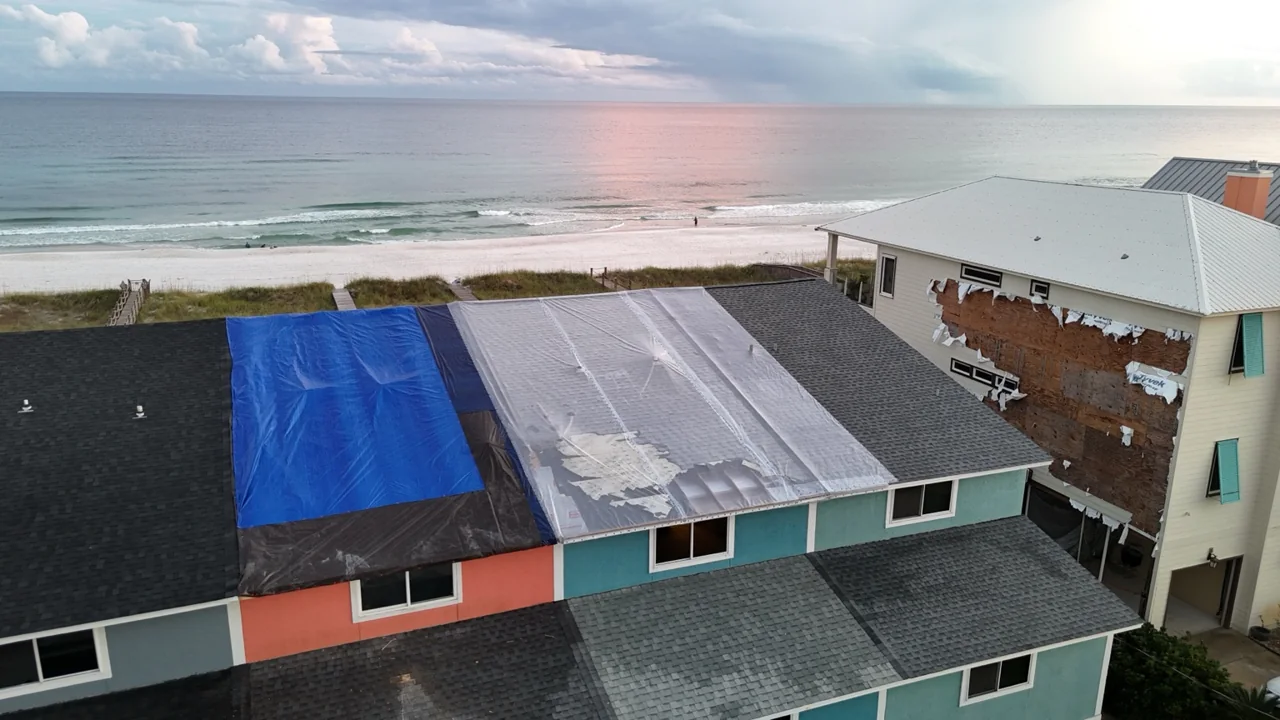
This is an installation view, not a controlled performance comparison. It shows the visible difference between the coverings; it does not establish how either installation performed during a storm.
A closer look at the material
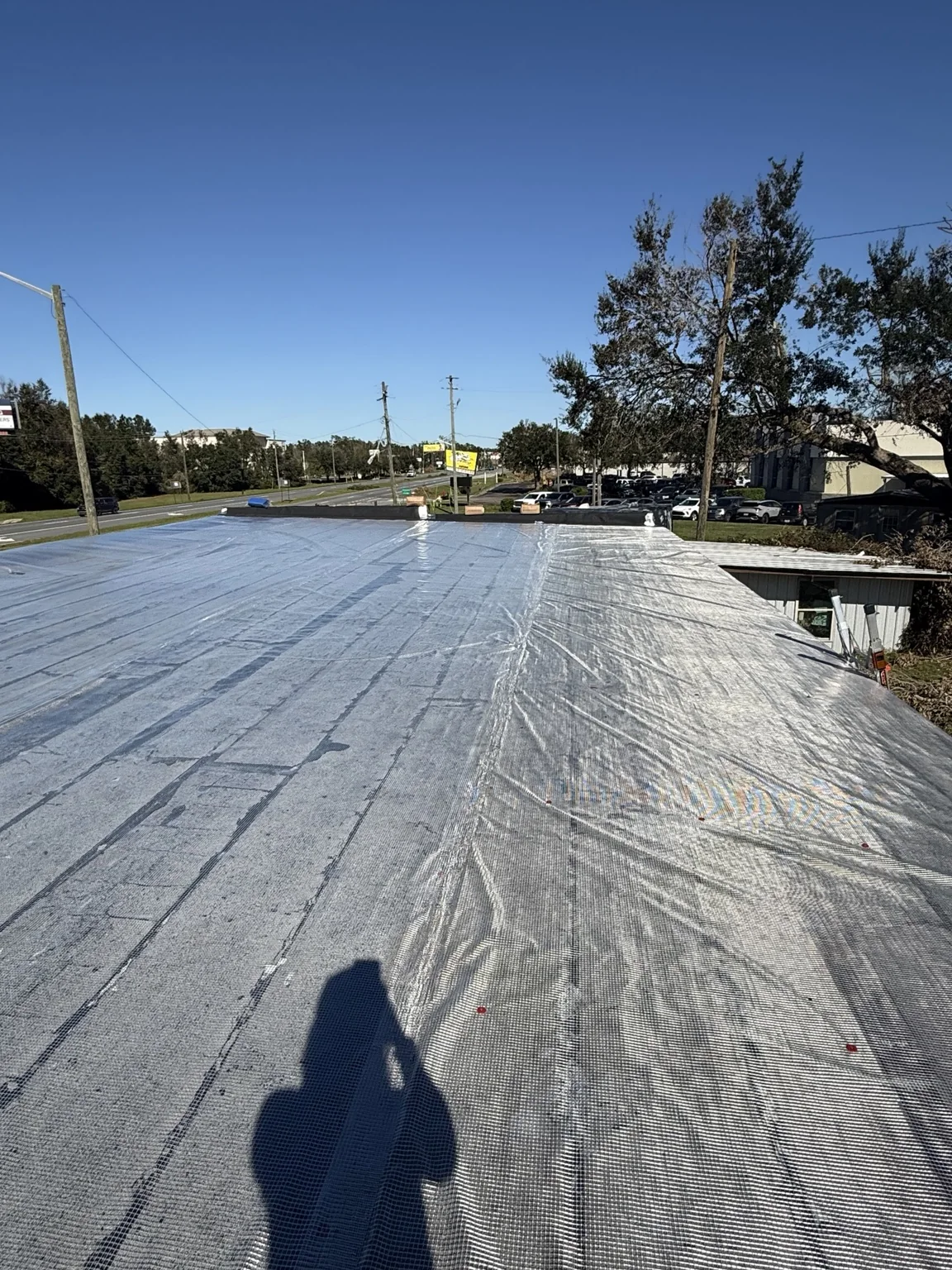
The close-up photographs show the reinforcement pattern and roof surface visible through Shield. That visibility is the feature to consider when a project involves documentation, follow-up observations, or an upcoming inspection.
An opaque covering blocks a direct view of the surface beneath it. A transparent covering can preserve that view. Whether the view is sufficient for a particular inspection depends on what the inspector or adjuster needs to examine. Access to concealed layers or closer examination may still require removal.
For a fuller discussion, read our clear roof covering and damage documentation guide:
Clear covering documentation guide
Where Shield fits in the job
Shield is temporary protection while the next stage of the roofing project is coordinated. It is not a permanent roofing system.
When evaluating it for a project, bring the roof dimensions, photographs, expected temporary-use period, and inspection needs into the conversation. The installer should confirm the application, attachment, seams, penetrations, and removal plan for that roof.
If your crew currently uses tarps or another membrane temporarily, compare the complete job requirements. Material price is one line item. Installation, accessories, inspections, return visits, and removal also belong in the discussion. The photos do not establish a specific labor saving; they show a product feature that may change the workflow on a suitable job.
Compare the options:
Compare temporary roof coverings
Planning your first Shield order
For future-order rolls, the specified 10-foot by 150-foot dimensions provide 1,500 square feet of gross material. Usable coverage depends on the layout, overlaps, edge details, and cuts. Confirm the roll size and available stock when requesting your quote.
Send Steel Skin:
- The project ZIP code and needed-by date.
- Measured roof area and photographs or a roof sketch.
- The proposed application and any inspection requirements.
- The quantity needed and receiving arrangements.
Our roll coverage guide explains the difference between gross material area and usable project coverage:
Roll coverage and delivery guide
See the product. Discuss the job.
Start with the installation footage, then review Shield's specifications and application requirements for your project.
View Steel Skin Shield:
Explore Steel Skin Shield
Request Shield pricing and availability:
Request Shield pricing and availability